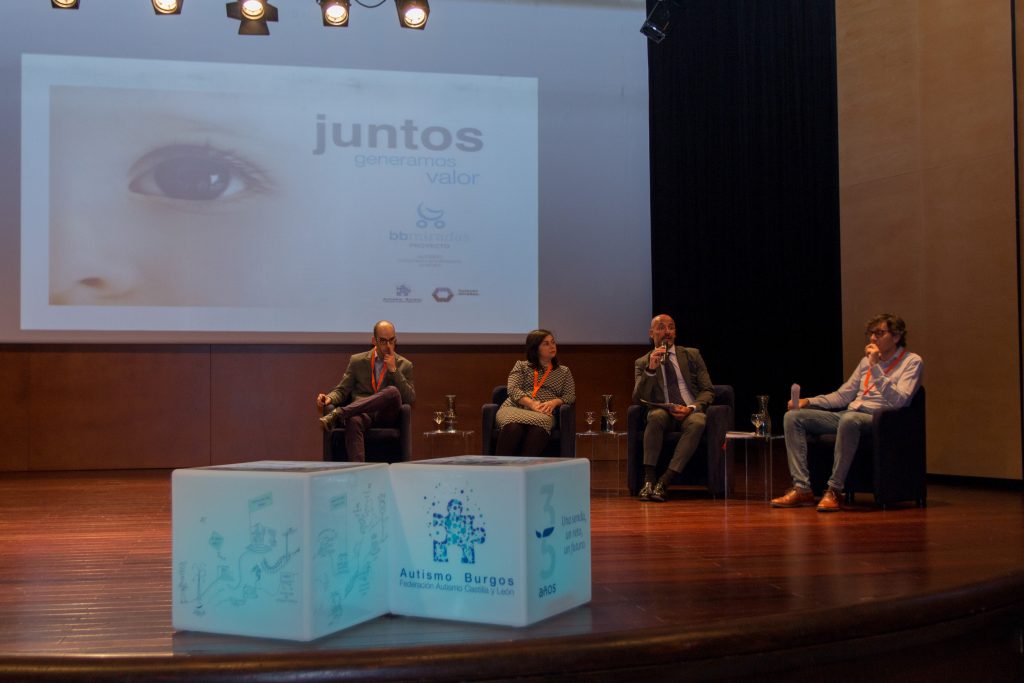
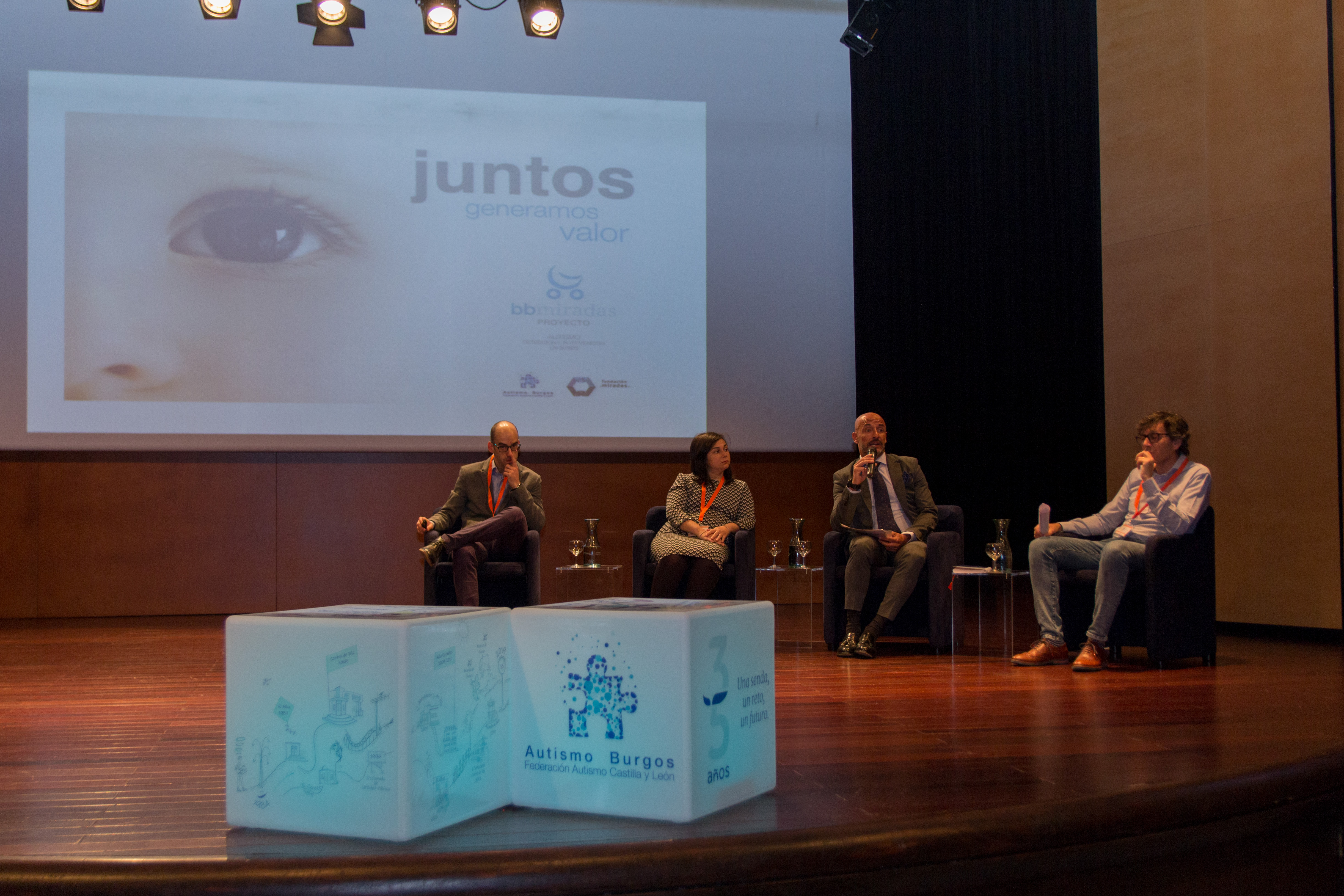
Last Friday, 17 May, we had the pleasure of speaking
at the ‘Earlier and Better’ session of the conference organised by Autismo Burgos to mark its 35th anniversary. The session explored various early intervention projects for ASD aimed at minimising its effects, and our bbMiradas project was the opening presentation.
This project is primarily aimed at monitoring children who, due to their genetic background, are at greater risk of developing an ASD. Using materials from an actual session, the working method was explained, as well as the need to interpret the data collected in order to make a diagnosis.
If the results are positive, it is very important to identify the affected areas so that, by focusing specifically on them from an early age, the impact they will have on the person’s life can be significantly minimised.
Conversely, if the result is negative, you should remain vigilant and continue with the tests until the end of the cycle (36 months) to rule out the possibility of ASD almost entirely; however, in at-risk groups, you should remain vigilant in case it develops later on.