
A significant breakthrough in the early detection of autism | Autism Ceuta
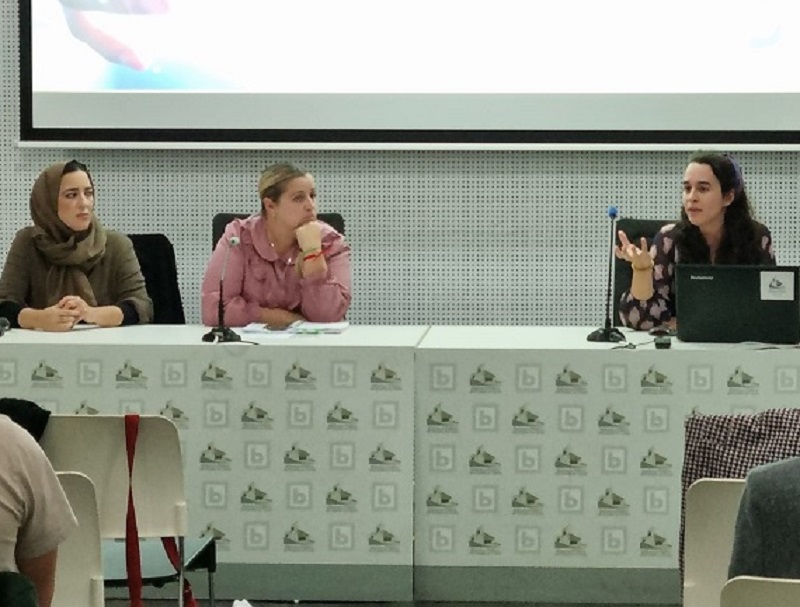
The presentation of the knowledge-sharing network for the early detection of autism took place at the “Adolfo Suárez” Library. The initiative, launched by ‘Autismo Burgos’ in collaboration with the ‘Miradas’ Foundation and supported by ‘Autismo España’, was presented by Beatriz Cavero, a research assistant at ‘Autismo España’, and Jennifer Gálvez, a research and outreach assistant at ‘Autismo España’.
The initiative, which was launched in 2017 and is now active in ten social care organisations in Ceuta, Andalusia, Castile and León, Castile-La Mancha, Murcia and Valencia, aims primarily to use technology to improve the early detection of signs of autism. Beatriz Cavero emphasised that the programme is designed to facilitate the exchange of information not only between the institutions but also amongst social workers in each region.
According to Cavero, the programme in Ceuta has seen remarkable growth over the past six months, with 12 families newly enrolled. At national level, more than 500 infants have gone through the programme, of whom 132 have received a diagnosis and 135 are currently undergoing treatment. Cavero emphasised the importance of strengthening and training the healthcare system in early detection, as diagnosis is sometimes delayed until the age of 4 or 5, even though symptoms can appear as early as 12 months of age.
Jennifer Gálvez, Research and Outreach Officer at Autismo España, pointed out that in Spain one in every 100 newborns is autistic, which equates to a total of around 450,000 people.
The early detection programme for autism focuses on assessing infants aged between 4 and 36 months across nine developmental stages, taking into account criteria such as personal development, social and cognitive communication skills, and the social and family environment. Gálvez emphasised the importance of intervening as early as possible to improve outcomes and minimise the social and economic impact.
In another significant announcement, the “iCalidad” programme was unveiled, involving 30 organisations, including “Autismo Ceuta”. The aim of this programme is to gain a comprehensive understanding of the situation of people with autism from the perspective of the individual themselves, a professional and a family member.
The e-Cuaderno programme was also unveiled; it is designed to improve communication between professionals and families, with a particular focus on the effective coordination of services as a key aspect.
The introduction of these programmes represents a significant step forward in the early detection of autism and in improving the quality of life for those affected and their families.