
The initial results of the programme have been presented bbMiradas, the result of a joint effort by Autismo Burgos, the Miradas Foundation and the research group at the University of Burgos, GRINUBUMET. This study achieves a higher success rate in the early detection of autism and lowers the age of diagnosis from 7 to 3 years compared with studies conducted to date worldwide.
bbMiradas is an early detection programme for infants referred by paediatric services due to the presence of warning signs, a higher clinical risk, or a family history of the condition.

Since 2017, this programme has analysed data from 400 babies, of whom 98 have been diagnosed and 128 have received specialist care; 74 of these are currently in Burgos. The project is currently in the roll-out phase and is being extended to nine other provinces across the country.
“This programme was set up with the aim of changing the lives of people with autism. The current prevalence in Europe is estimated at one in every 100 people and, according to the Centers for Disease Control and Prevention in Atlanta, the latest figures are one in every 36,” explained María Merino Martínez, technical director of the bbMiradas programme, to give an idea of the enormous impact this social and communicative disability has on society at a personal, economic, social, health and political level.
According to the director, the best way to reduce this impact—the strategic approach—is early detection, and that is where the eye-tracking technique comes in. It is a non-invasive procedure that involves showing babies videos for three minutes and analysing their reactions.
The analysis of this data is carried out by GRINUBUMET. “We use big data mining tools and a neural network that we have designed to extract useful information,” he said Joaquín Pacheco, member of the research group.
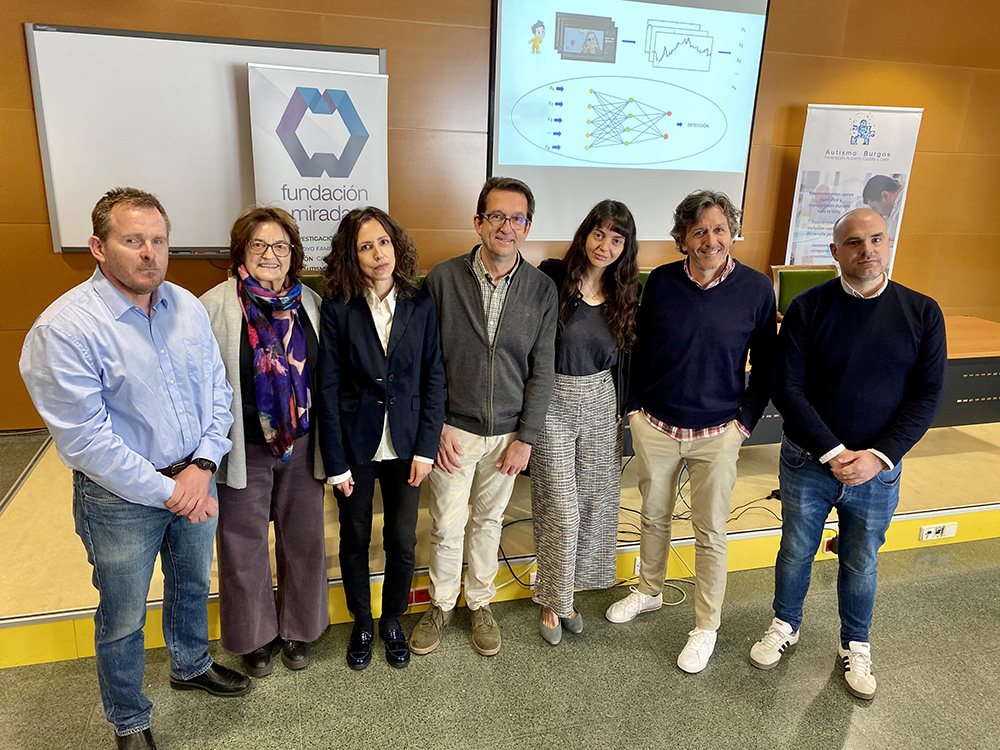
Pacheco pointed out that the strength of this analysis lies in the robustness of the model developed and its accuracy rate – over 90% – following the 531 measurements taken, and particularly in the fact that this was achieved in 3-year-olds, compared to the 7-year-olds covered by similar studies, which also focus on samples of no more than 60 subjects. “Obtaining such useful data at such a young age is truly important, and so far we are not aware of any other models with these characteristics.”
The researcher also highlighted the personal satisfaction that all members of the group have derived from taking part in this project and thanked the professor from UBU José Luis Cuesta – from the Miradas por el Autismo Chair – and the Vice-Chancellor for Research, José Miguel García Pérez, to facilitate initial contacts with a view to participating in the project.
He expressed himself in exactly the same way Silvia Casado Yusta, coordinator ofGRINUBUMET.“It is a privilege for us, and we are very grateful that our group has been entrusted with this kind of work in such a socially significant and fascinating field of research,” he said, whilst expressing his satisfaction at the positive results achieved.
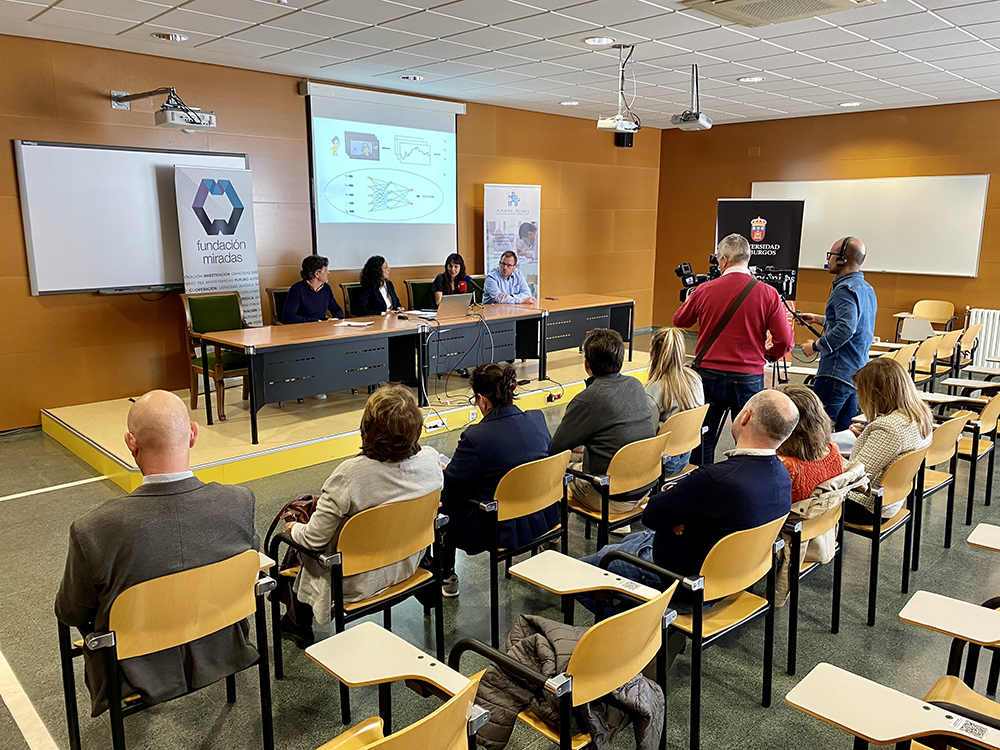
Javier Arnáiz, technical director of Autismo Burgos, recalled that “This project was launched six years ago as an innovative initiative in Spain, Europe and worldwide, using this technology for the first time and adopting a holistic approach – not only focusing on early detection, but also on intervention and support for families, for whom the programme is free of charge”.
He also highlighted the leadership of Simona Palacios, president of Autismo Burgos, the commitment of the entire team, and the support received from institutions such as HUBU, the City Council and early intervention organisations.
Early detection and intervention before the age of four is crucial, as neural plasticity is linked to a change in the course of development; these babies will have fewer needs and will be able to function more effectively in their daily lives.
For Arnáiz, the project’s findings provide scientific evidence of the importance of early detection for those diagnosed. “When you start from reality, you generate knowledge, and with such a strong research team, you end up with practical, applied research that has a direct impact on people’s quality of life,” said Arnáiz.
News taken from the University of Burgos website News taken from the University of Burgos website https://www.ubu.es/noticias/autismo-burgos-fundacion-miradas-y-la-ubu-presentan-los-mejores-resultados-del-mundo-en-la-deteccion-temprana-del-autismo
Article in the online newspaper Burgos Conecta: https://www.burgosconecta.es/sociedad/salud/programa-bbmiradas-burgos-ofrece-acierto-deteccion-temprana-20230420164541-nt.html
Article in Diario de Burgos: https://www.diariodeburgos.es/noticia/Z6E912BEF-FE7E-011D-741E9264E8E24F91/202304/bbmiradas-lidera-a-nivel-global-la-deteccion-precoz-de-autismo
Video of the data presentation: