
NEWS TAKEN FROM THE TELEFÓNICA FOUNDATION WEBSITE: https://www.fundaciontelefonica.com/noticias/entrevista-maria-verde/
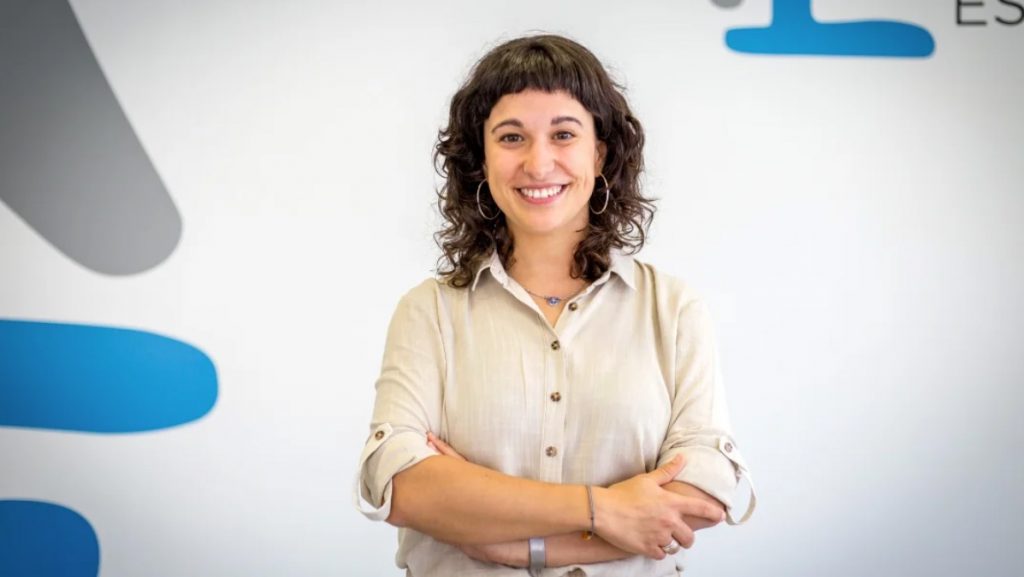
We spoke to María Verde Cagiao, a researcher at Autism Espain and promoter of the bbMiradas project, a clear example of how technology can be harnessed – in this case for the benefit of people’s health – to help us understand ourselves better and take earlier action through prevention and early diagnosis. Big data and artificial intelligence form part of this project, which we presented at the Third Sector Digital Transformation Conference in 2022, and now we’re going to find out more about it from one of its key figures.
- bbMiradas is one of Autismo España’s flagship projects, a pioneering programme for its contributions to the early detection and treatment of Autism Spectrum Disorder. How did this project come about? What does it involve?
bbMiradas was established in the province of Burgos around five years ago. It is an initiative of the Miradas Foundation and the Burgos Autism Association, resulting from their long-standing work in supporting people with autism, and from their collaboration with the research team at the Yale University Center for Child Study, led by Ami Klin and Warren Jones (pioneers in the development of studies similar in approach to bbMiradas).
This project is a support programme for families with babies aged between 4 and 36 months, aimed at monitoring their development and helping to improve the early detection, diagnosis and intervention of autism when early warning signs are present. Its aim is to improve the prognosis for these children and enhance the quality of life for the whole family. Furthermore, bbMiradas aims to promote, through collaborative work with healthcare professionals, families and society, a direct referral system to streamline processes and ensure a rapid and effective assessment of babies suspected of having autism: the sooner intervention begins, the better the outcomes will be.
From birth, a specialist team regularly monitors the development of babies at high risk of autism. To this end, screening tools are used to identify the specific risk of ASD or other conditions affecting development; standardised tests are carried out to assess psychomotor development (language, communication, play, social interaction, motor milestones, etc.) and adaptive development (sleep, feeding, etc.); and observations are made in natural play and interaction settings to assess social communication, interaction and symbolic capacity. Finally, eye-tracking technology is also used as an innovative tool for researching how these babies process social stimuli.
- To carry out this project, it is important to have healthcare professionals on board, and in this case, Burgos Public Hospital has been supporting you right from the start. What role does the healthcare sector play, and what do you think could be the key to growth in this area?
Indeed, in the province of Burgos, the organisation has an agreement with the neuropaediatric department at Burgos University Hospital, which includes provisions for the use of the facilities for the routine assessment of children, as well as the referral of suspected cases. Primary care paediatric staff have also been trained and made aware of the programme; they are familiar with it and bear it in mind when seeing children who display warning signs.
The establishment of partnership agreements between organisations specialising in autism and the public sector – not only with health services but also with education and social services – presents a unique opportunity in our country to implement best practices in the early identification and intervention of autism.
- We’ve seen that the bbMiradas project is growing and expanding into other regions – what are your plans for its roll-out?
From the outset, the bbMiradas project has been spearheaded and promoted by Autismo España. Currently, in close collaboration with the Miradas Foundation and Autismo Burgos, it is in the process of being rolled out and implemented across nine further organisations in different provinces across Spain: Seville, Albacete, Badajoz, Murcia, Huesca, Segovia, Valencia, Granada and Ceuta. The plan is to continue the project as it becomes established in these locations and to extend it to further parts of Spain, thereby maximising its reach and impact.
- How have families responded? How does an early diagnosis of this condition change people’s lives?
The response has been positive. Many families who already have children with autism and are planning a second baby harbour doubts, fears and uncertainties about the development and prognosis of their next child. bbMiradas provides the reassurance that a professional team specialising in autism will monitor their babies from practically birth and throughout their early years, detect any potential warning signs and ensure intervention should it be necessary. Early diagnosis usually leads to a better long-term prognosis and a better quality of life for both children and their families.
- Technology is a great ally in this case. Data collection and processing are key to identifying patterns, and techniques such as visual tracking and social attention analysis using eye-tracking technology have made all the difference. How did you arrive at this approach? What resources did you draw on?
The eye-tracking patterns recorded using eye tracking reveal which socio-communicative stimuli babies tend to focus on and how they explore them visually. This makes it possible to analyse any differences that may exist between children who show signs of autism and those who do not. The experimental design of these tasks draws on research being carried out by teams with a long scientific track record (such as that of Ami Klin, mentioned earlier) and which, at present, represent one of the main paradigms of early research into autism.
- What do you think the future challenges are in the field of autism for families? And for society as a whole?
The main challenges ahead of us relate to ensuring that the support provided to people with autism is comprehensive, specialised and of high quality at all levels and across all stages of their lives: from screening and diagnosis, early intervention, support and interventions, education, access to employment, to adulthood and independent living, and so on. It also remains a challenge to raise awareness and understanding across society about what autism spectrum disorder is, and to promote a positive view of it, free from prejudice and myths.
- From a professional perspective and in your role at Autismo España, what are the organisation’s current areas of focus? What is Autismo España currently prioritising?
Our aim, as always, remains to improve the quality of life and promote the rights of people with autism and their families. We are investing significant resources and effort into developing and implementing support practices and systems that incorporate the best scientific evidence and are aligned with human rights, specifically through the development of the Spanish Centre for Autism Spectrum Disorder. This is an advisory centre to the Royal Board on Disability, through which we are contributing to the drafting of the Action Plan on Autism Spectrum Disorders 2023–2027.
In this way, the findings produced by the Centre will help to inform public policy decisions, combining an objective assessment of the needs of people on the autism spectrum with the best available evidence to address those needs.
Author: Silvia Movellán Viaña, from the Social Action and Volunteering Department at the Telefónica Foundation.
NEWS TAKEN FROM THE TELEFÓNICA FOUNDATION WEBSITE: https://www.fundaciontelefonica.com/noticias/entrevista-maria-verde/